Most new snowboard brands want to launch with a warm, heavily insulated jacket loaded with every feature. In most cases, that is the wrong first product. When you brief a snowboard jacket manufacturer for your first run, the shell vs insulated decision drives your cost, your sell-through and how many seasons the design can stay on sale.
Here is the short answer. For most startup snowboard brands, a 2L or 2.5L waterproof shell is the smarter first jacket, and an insulated version makes sense as a second drop once you know your market. BLACKFORGEX manufactures both shell and insulated snowboard jackets from 10 pieces per style and colour, with samples ready in 3–7 working days.
Shell vs Insulated: What a Custom Snowboard Jacket Manufacturer Builds
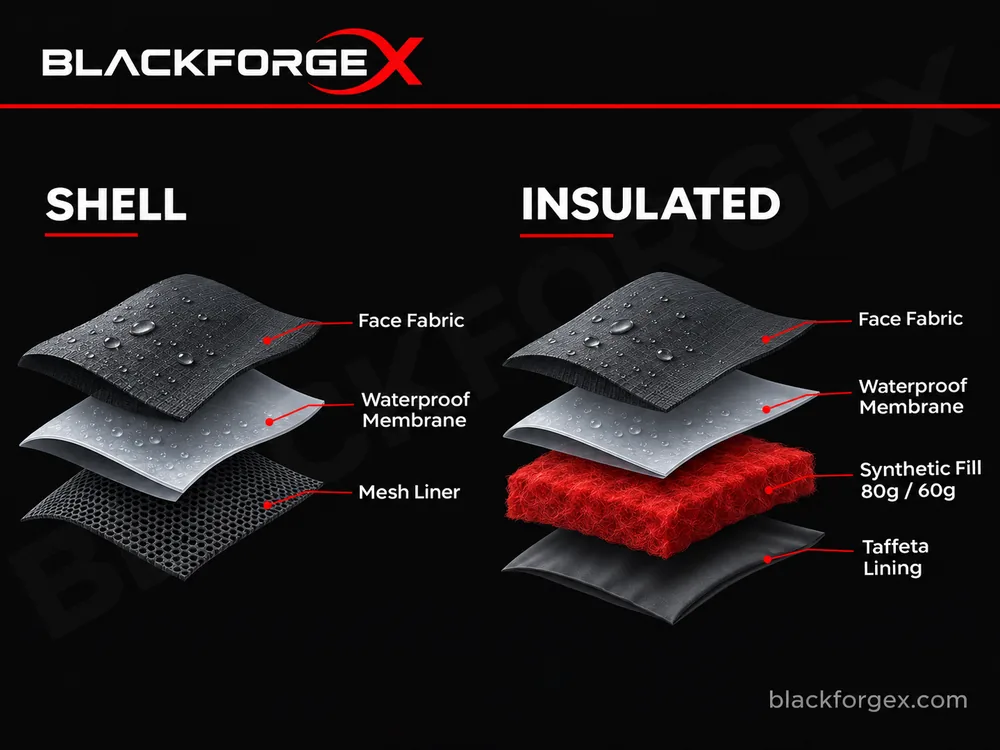
Both jackets start from the same outer fabric. What sets them apart is what goes inside.
The shell jacket
A shell is a waterproof breathable outer fabric with a membrane, taped seams and a light inner layer. In a 2L build that inner layer is a hanging mesh or taffeta liner. In a 2.5L build it is a printed protective coating. In a 3L build it is a tricot bonded directly to the membrane. A shell has no insulation, so the rider controls warmth with layers underneath.
A typical startup shell spec looks like this: 2L polyester face fabric, a 10K/10K or 20K/20K membrane, fully taped seams, and a boxy, longer cut that works over a hoodie or a fleece. If you are unsure which build fits your price point, our guide to 2L vs 2.5L vs 3L jacket construction breaks down the trade-offs.
The insulated jacket
An insulated jacket takes the same shell and adds two more components: a layer of fill and a taffeta lining. In snowboard outerwear that fill is almost always synthetic, usually in the 60 to 120 g/m² range. A common split is 80 g in the body and 60 g in the sleeves, because arms move more and overheat faster.
Every one of those additions means more cutting, more sewing, quilting or tacking lines to hold the fill in place, and more QC points. That is where the extra cost and time come from.
Why Most Startup Snowboard Brands Should Make a Shell First
The truth is that a shell does more work for a new brand than an insulated jacket does. There are four reasons.
It sells for more of the season. A shell works from early season storms all the way through spring slush. An insulated jacket stops selling the moment the weather warms up. I’ve seen brands launch with a single 120 g insulated jacket in one colourway and end up discounting half the stock by late February.
It sells in more markets. A shell plus layers works for a rider in the Alps, Colorado, Japan or Scotland. A heavily insulated jacket suits cold, dry resorts and little else.
The baggy fit works better. Snowboard style leans loose and long. A loose shell drapes well. A loose insulated jacket can look like a sleeping bag, and fit problems are harder to correct once fill is involved.
Riders sweat more than people assume. This is the misconception I push back on most often. Founders tell me “customers want warmth.” Core riders hike park features, ride trees and traverse flats, so they overheat fast. Most of them would rather add a mid layer on a cold day than wear a jacket they cannot vent. Insulated jackets mostly sell to resort riders who spend long periods on chairlifts, and that is often not the audience a new snowboard label targets first.
When an Insulated Snowboard Jacket Makes Sense First
An insulated jacket is not a mistake. It just needs the right conditions. Make insulated first if:
- Your market is genuinely cold. Canada, the Nordics, the US Midwest and Eastern European resorts all see long stretches of sub-zero riding.
- Your customer is a resort or beginner rider who wants a single jacket and no layering.
- You are launching a kids’ line. Children lose heat faster and parents prefer one warm jacket over a layering system.
- Your price positioning needs it. An insulated jacket supports a higher retail price, which can help a premium brand story.
If you go this route, keep the fill moderate. A 60 to 80 g synthetic jacket covers most resort conditions. Going to 150 g narrows your season and makes the jacket harder to ride in.
Honestly, I would skip down for a first snowboard jacket. Snowboarders sit in the snow, and wet down loses most of its loft. Synthetic fill keeps working when damp and costs less. If you do want down for a lifestyle piece, specify RDS-certified down.
How to Spec Your First Snowboard Jacket for OEM Production
A clear tech pack is the fastest way to a good first sample. In my experience, unclear specs cause more sampling delays than anything else. Here is what your snowboard jacket OEM partner needs from you.
Fabric and construction
- Face fabric: polyester or nylon, plus the weave and finish (twill, ripstop, plain, matte or brushed)
- Construction: 2L, 2.5L or 3L
- Waterproof / breathability rating, for example 15K/10K or 20K/20K
- DWR finish: specify PFC-free
- Seam taping: fully taped is standard for snowboard outerwear
More detail on membranes, taping and waterproof testing is on our waterproof jacket manufacturing page.
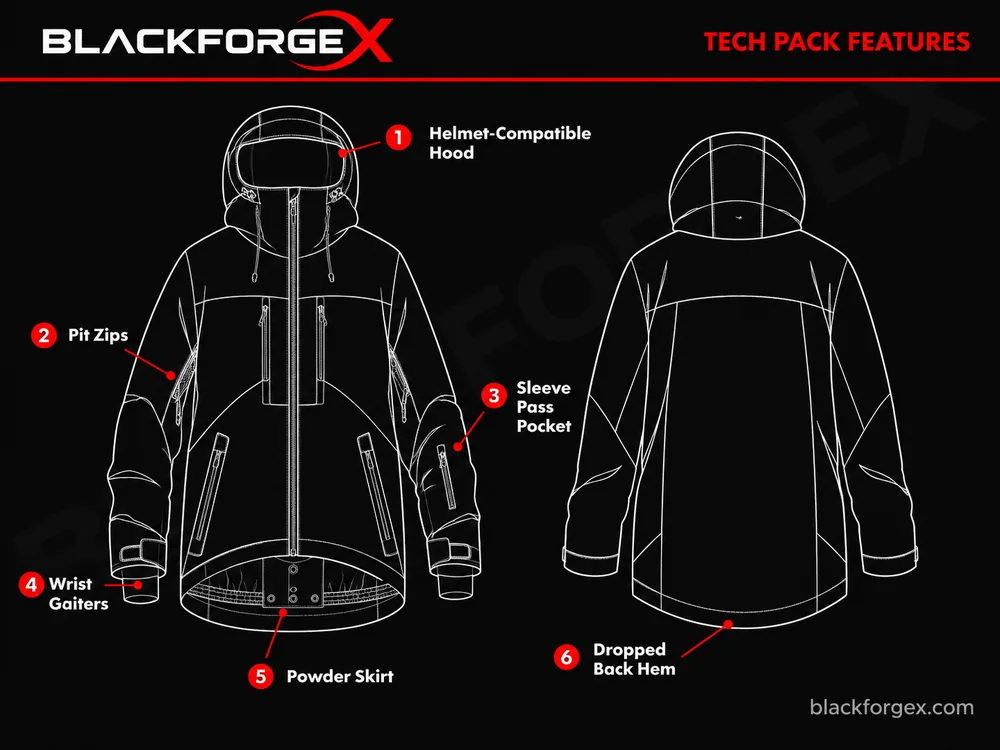
Snowboard-specific features
- Removable or fixed powder skirt with gripper elastic
- Helmet-compatible hood with a volume adjuster
- Inner wrist gaiters with thumb holes
- Underarm pit zips for venting
- Lift pass pocket on the left sleeve
- Internal goggle pocket with a wipe cloth
- Longer length and a dropped back hem (snowboard jackets typically sit at mid-thigh, longer than a ski jacket)
What NOT to do on your first run
Do not stack every premium option into your first jacket. A 3L, 30K membrane with waterproof zippers everywhere, heavy fill and five custom trims will triple your sample cost and push your retail price above what a new name can sell at. Pick the two or three features your riders actually care about and spend there.
Also, do not specify Gore-Tex for a 30-piece order. Gore-Tex fabric is only practical at 500 pieces or more. A quality laminated membrane gives startups comparable waterproofing at a fraction of the minimum.
If you do not have a tech pack yet, we can build one with you as part of our tech pack and sample development service.
Snowboard Jacket Manufacturer Cost, MOQ and Lead Times
What drives the price
In rough order of impact:
- Construction (3L costs more than 2.5L, which costs more than 2L)
- Membrane rating and face fabric
- Insulation and lining (an insulated version costs more than the same jacket as a shell)
- Length of seam taping, which grows with every panel and pocket
- Zippers and trims
- Printing, embroidery and custom labels
We give pricing in the first reply once we see your design, so you can compare shell and insulated costs side by side before committing.
What to expect from BLACKFORGEX
- MOQ: 10 pieces per style per colour
- Sample: 3–7 working days. The sample cost is deducted from your bulk invoice.
- Fabric swatches: sent inside the sample parcel
- Bulk: around 14 working days from sample approval to your door, DDP (duties prepaid)
- Fabric: ordered after your sample is confirmed and paid, so you are not committing to material before you approve the jacket
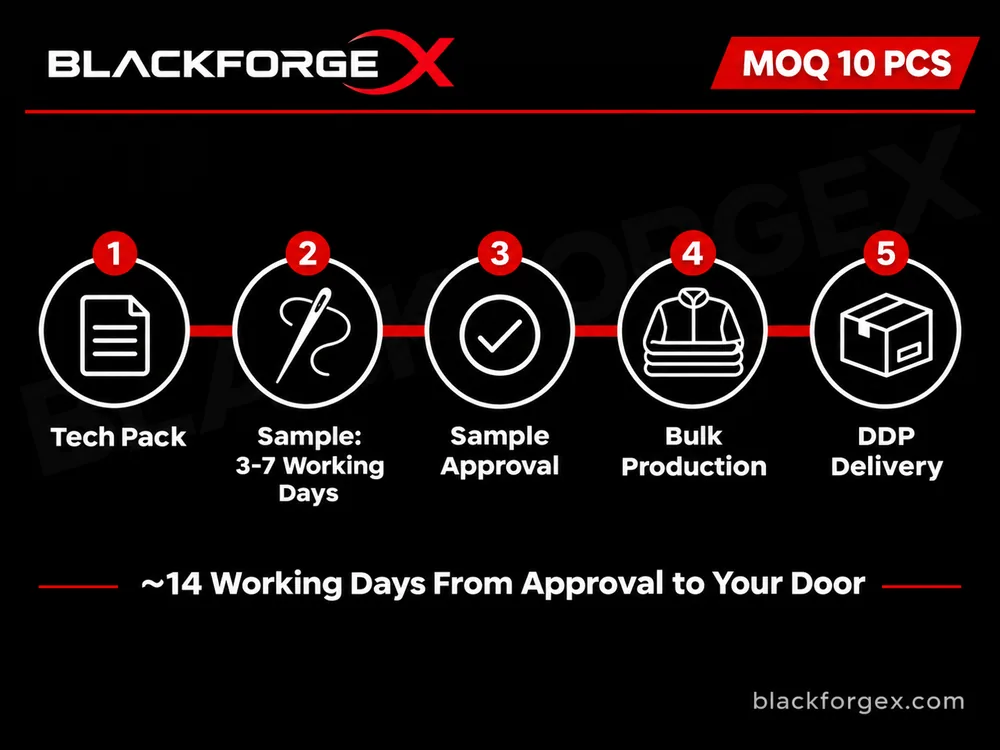
A realistic first run looks like this: one shell style in two colourways at 10 to 20 pieces each, so 20 to 40 jackets total. Sell through the season, see which colours and sizes move, then add an insulated version in your second drop using real sales data instead of guesswork.
You can see the full range on our snowboard apparel manufacturing page.
Frequently Asked Questions
Should a new snowboard brand make a shell or an insulated jacket first?
For most startups, a shell. It sells across a longer season and more markets, it suits the baggy snowboard fit, and it costs less to sample and produce. Insulated works best as a second product unless your market is very cold.
What waterproof rating does a snowboard jacket need?
10K/10K covers casual resort riding in dry climates. 20K/20K is the better choice for wet snow, storm days and backcountry. Ratings above that are rarely needed for a first collection.
What is the minimum order for custom snowboard jackets?
At BLACKFORGEX, the MOQ is 10 pieces per style per colour. That lets you test two colourways with as few as 20 jackets.
How long does a snowboard jacket sample take?
3–7 working days once the design and tech pack are confirmed. Bulk production then takes around 14 working days from sample approval to delivery, DDP.
Can I use Gore-Tex for my first production run?
Only from 500 pieces upward. For smaller runs we recommend a laminated waterproof breathable membrane, which gives startups solid performance without the fabric minimum.
Should I use down or synthetic insulation in a snowboard jacket?
Synthetic, in most cases. Snowboarders spend time sitting in snow, and synthetic fill keeps insulating when damp. If you want down for a lifestyle piece, specify RDS-certified down.
The best first jacket is the one that sells through and teaches you what your riders want next. For most brands, that is a well-built shell. Get that right, then build your insulated line on top of it.
Ready to manufacture your snowboard jackets? Send us your tech pack or brief at sales@blackforgex.com or WhatsApp us at +1 405 759 9666. Sample in 3–7 working days. MOQ from 10 pieces. You can also reach us through our contact page.
